


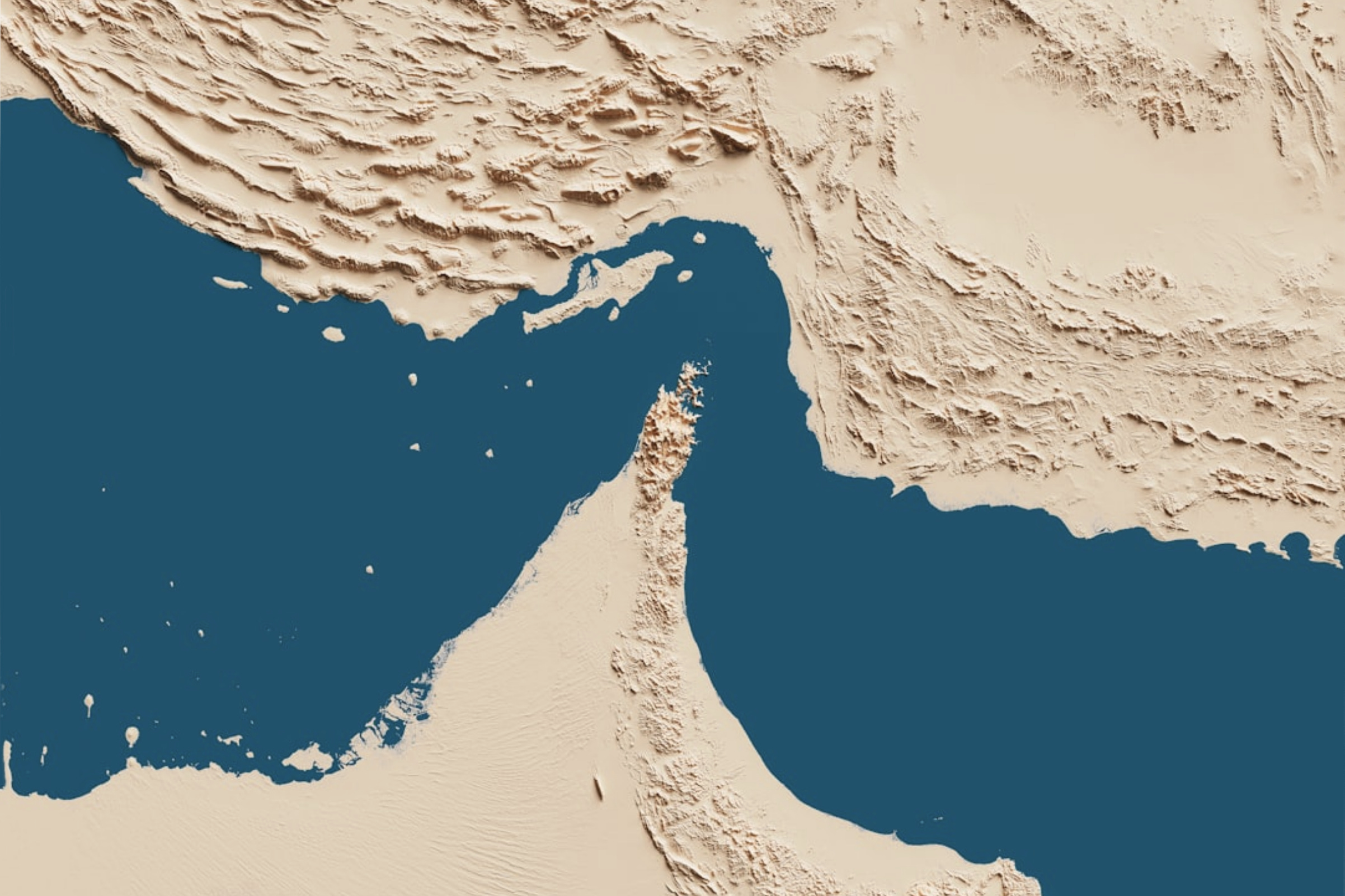
Iran controlled transit through the Strait of Hormuz for seven weeks before its foreign minister announced the waterway open on April 17. The reopening lasted less than a day. Within hours, the Islamic Revolutionary Guard Corps fired on commercial ships, broadcast warnings that the strait remained closed, and publicly contradicted the foreign ministry’s announcement. The instrument had not been released. It had been contested.
Throughout the closure, the China-energy connection has drawn sustained analytical attention. The question driving most of it is straightforward: how much oil will China lose?
War on the Rocks asked how the war affected China’s energy security. Foreign Policy asked whether the crisis could consolidate China’s energy dominance. The AP covered the war as accelerating China’s clean tech advantage. The Washington Post tracked surging Chinese renewable exports. Bruegel, a Brussels-based economic policy think tank, modeled the GDP impact of sustained oil price elevation.
These are supply-and-demand questions. They are incomplete, and they miss what the closure made visible.
On March 26, Iranian Foreign Minister Abbas Araghchi announced that ships from five nations would be permitted to transit the strait: China, Russia, India, Iraq, and Pakistan. Ships from nations hostile to Iran were blocked. In the weeks that followed, Malaysia, Thailand, Turkey, and the Philippines each negotiated individual access. France and Italy reportedly opened talks. Lloyd’s List described the emerging system as a “toll booth,” with vessels routed through Iranian territorial waters under a pre-approved vetting process requiring authorization from Iranian authorities. Some ships paid transit fees reportedly exceeding one million dollars.
For three weeks, the strait operated as an alignment-sorting instrument through administrative control of a maritime chokepoint.
Iran converted the strait into a governance mechanism that rewards states whose energy, financial, and institutional relationships with Tehran carry cascading consequences if severed, and penalizes states whose alignment architecture runs through Washington. The sorting is based on governance entanglement, not market logic.
That distinction matters because it was visible before the first bomb dropped.
On March 5, I published a field observation arguing that US pressure on Iran and Venezuela was targeting something most analysis was not tracking: the energy governance networks through which China builds strategic resilience. The argument was that these networks are administrative systems, not pipelines and production platforms. Loan structures, port concessions, joint venture agreements, regulatory integration, and financing arrangements that embed political relationships inside economic ones. The energy is the mechanism. The governance entanglement is the product.
The 25-year China-Iran Comprehensive Strategic Partnership, signed in 2021, embeds governance coordination across energy, infrastructure, telecommunications, and security sectors simultaneously. What the March 5 piece argued, and what the weeks since have confirmed, is that this architecture does not dissolve under kinetic pressure. It activates.
On April 11, CNN reported that US intelligence indicates China is preparing to transfer shoulder-fired anti-air missile systems to Iran, routed through third countries to mask their origin. Chinese companies had already been selling Iran sanctioned dual-use technology throughout the war. But a direct government weapons transfer, if confirmed, would represent the partnership’s security provisions activating under exactly the conditions the agreement was designed to address. The architecture is performing as built.
Meanwhile, China and Pakistan jointly delivered a five-point peace initiative. China was credited with helping broker the April 8 ceasefire. And on April 7, China and Russia vetoed a UN Security Council resolution that would have called on states to ensure safe navigation in the strait, shielding Iran’s administrative control over the waterway from international legal challenge.
The states that secured Hormuz transit did so through governance relationships, not military posture or market leverage. India negotiated access through diplomatic channels built on decades of bilateral engagement. Pakistan leveraged its role as mediator. China’s access followed from a partnership agreement whose institutional depth makes severance more costly than accommodation.
This is the alignment calculus the March 5 piece described: states do not make coalition decisions in contingencies based solely on political preference or security guarantees. They make them based on calculations about which relationships, if disrupted, would produce cascading administrative and financial consequences their domestic systems cannot absorb. Energy governance networks are one of the most powerful mechanisms for shaping that calculation before any crisis arrives.
But the attempted reopening on April 17 revealed a second function of the instrument.
When Araghchi announced the strait was open, the IRGC overruled him within hours. Its naval forces fired on commercial ships, broadcast on marine radio that passage required its authorization, and declared the foreign ministry’s announcement void. IRGC-affiliated media called for Araghchi’s removal. A senior hard-line lawmaker said the announcement had eased oil prices and handed a gift to the United States. Iran’s joint military command formally reasserted the closure the following day.
The strait is now also the terrain on which Iran’s internal governance competition is playing out. The IRGC invoked the authority of Supreme Leader Mojtaba Khamenei to override the foreign ministry. But Mojtaba Khamenei has not appeared publicly since his appointment in early March. The instrument is being operated in the name of an authority whose functional control over it remains undemonstrated.
This is consistent with the pattern identified in an earlier field observation on Iran’s post-decapitation governance architecture: the war has accelerated a shift toward security-dominant governance, with the IRGC consolidating as the primary executor of regime authority. The Hormuz reversal is that dynamic made visible on a single piece of contested administrative terrain. Control of the strait now reveals where governance authority actually sits within the regime, which is not where the diplomatic apparatus claims it sits.
The transit protocols, vetting procedures, and bilateral access arrangements built over seven weeks of closure remain on the books. The states that negotiated passage did not un-negotiate their relationships when shipping resumed. Iran now holds a functioning administrative instrument available for redeployment, one whose value has been demonstrated not only to external actors but to competing power centers within the regime itself.
The analytical conversation spent seven weeks asking what would happen to China’s oil supply. The more significant question is what happened to the governance footholds that shaped how a dozen states calculated their alignment the moment the strait closed. Those calculations were not made in March. They were made over years, through the slow accumulation of joint ventures, financing arrangements, regulatory integration, and institutional relationships that do not present themselves as strategic instruments until a contingency forces them into view.
The barrels question will resolve when the strait reopens. The governance architecture question will not. The administrative entanglement that determined which ships passed through the strait and which ones waited is the same entanglement that will shape how those states calculate their positions in the next contingency, and the one after that. All sides now know the instrument works.