


Geopolitical pressure is visible. The architecture it targets rarely is.
Recent US actions in Venezuela and the escalation against Iran have been analyzed primarily through the lenses of regime behavior, narcotics interdiction, nuclear nonproliferation, and regional deterrence. Those frames are not wrong. They are incomplete. Taken together, the two theaters reveal something that neither explains individually: pressure applied not only to regimes, but to the energy governance networks through which China builds strategic resilience.
The distinction matters. Energy governance networks are not pipelines and production platforms. They are administrative systems: loan structures, port concessions, joint venture agreements, regulatory integration, and financing arrangements that embed political relationships inside economic ones. When China extends oil-backed financing to Venezuela or signs a 25-year comprehensive strategic partnership with Iran, it is not simply securing barrels. It is constructing governance footholds that shape how those states calculate political alignment under pressure. The energy is the mechanism. The governance entanglement is the product.
Venezuela illustrates the first layer. Chinese firms hold joint venture positions across Venezuelan fields. State banks have extended tens of billions in oil-backed loans, tying debt repayment directly to crude shipments. Those arrangements create legal entanglement, infrastructure capture, and elite patronage relationships that persist independent of any individual government’s preferences. Displacing them is not a market transaction. It is an administrative operation involving contract renegotiation, debt restructuring, and sustained pressure on actors whose interests are materially tied to the existing architecture.
Iran illustrates a different layer. Rather than loans-for-oil structures, the China-Iran relationship operates through sanctioned supply channels, regional logistics access, and deep infrastructure and telecommunications integration. The 25-year China–Iran Comprehensive Strategic Partnership agreement embeds governance coordination across sectors simultaneously. Neither kinetic escalation nor regime change automatically dissolves those administrative connections. Institutional architecture outlasts the governments that sign the agreements.
This pattern has historical precedent. During the Cold War, the Soviet Union used natural gas pipelines to embed political leverage inside Western European energy systems. Analysts at the time debated whether energy dependency would shape NATO cohesion during crises — whether states whose heating and industrial output ran through Soviet infrastructure would calculate alliance obligations differently under pressure. The debate was unresolved, but the strategic logic was understood by both sides. What China has constructed is a 21st-century version of that dynamic, extended globally and operating through governance integration rather than bilateral pipelines. The leverage is harder to see, more legally entangled, and correspondingly more difficult to reverse.
The significance becomes clear when the question shifts from supply to alignment. States do not make coalition decisions in contingencies based solely on political preference or security guarantees. They make them based on calculations about economic continuity, about which relationships, if disrupted, would produce cascading administrative and financial consequences that their domestic political systems cannot absorb. Energy governance networks are one of the most powerful mechanisms for shaping that calculation in advance of any crisis. A state whose energy sector is legally, financially, and infrastructurally integrated with Chinese-controlled systems faces a different alignment calculus than one whose energy relationships run through architectures that Washington can credibly sustain or replace.
That is what is being contested in Venezuela and Iran. Not simply regimes. Not simply supply. The administrative architecture that determines how states calculate alignment when contingencies arrive.
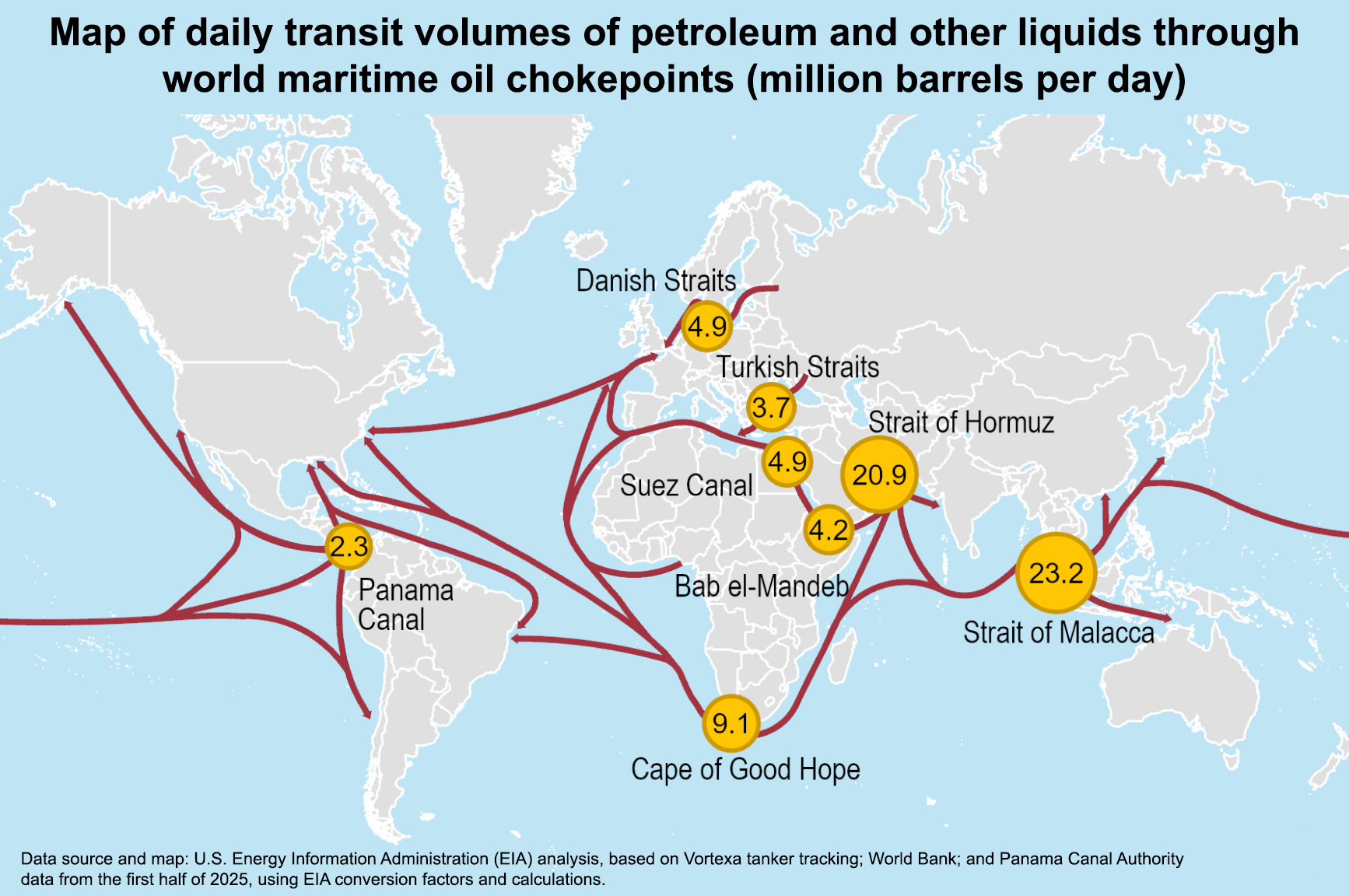
If pressure on energy governance nodes is becoming a deliberate instrument of great-power competition — and the convergence of Venezuelan, Iranian, Iraqi, and Arctic theaters, each a node in China’s global energy architecture, suggests it may be — then the relevant analytical question is not which regimes are being targeted. It is which nodes in the governance corridor system are most structurally exposed, and what their displacement implies for the coalition calculations that deterrence ultimately depends on. Taken together, these theaters map onto a set of energy corridors through which China has embedded administrative presence across multiple regions simultaneously.
Those questions do not resolve at the level of force posture. They resolve at the level of administrative terrain — which is where the competition is already unfolding.