

The Oil Exists. The Investable State Does Not.
Venezuela has rewritten its oil law, but the rights behind a multibillion-dollar investment remain vulnerable to decisions in Caracas and Washington.

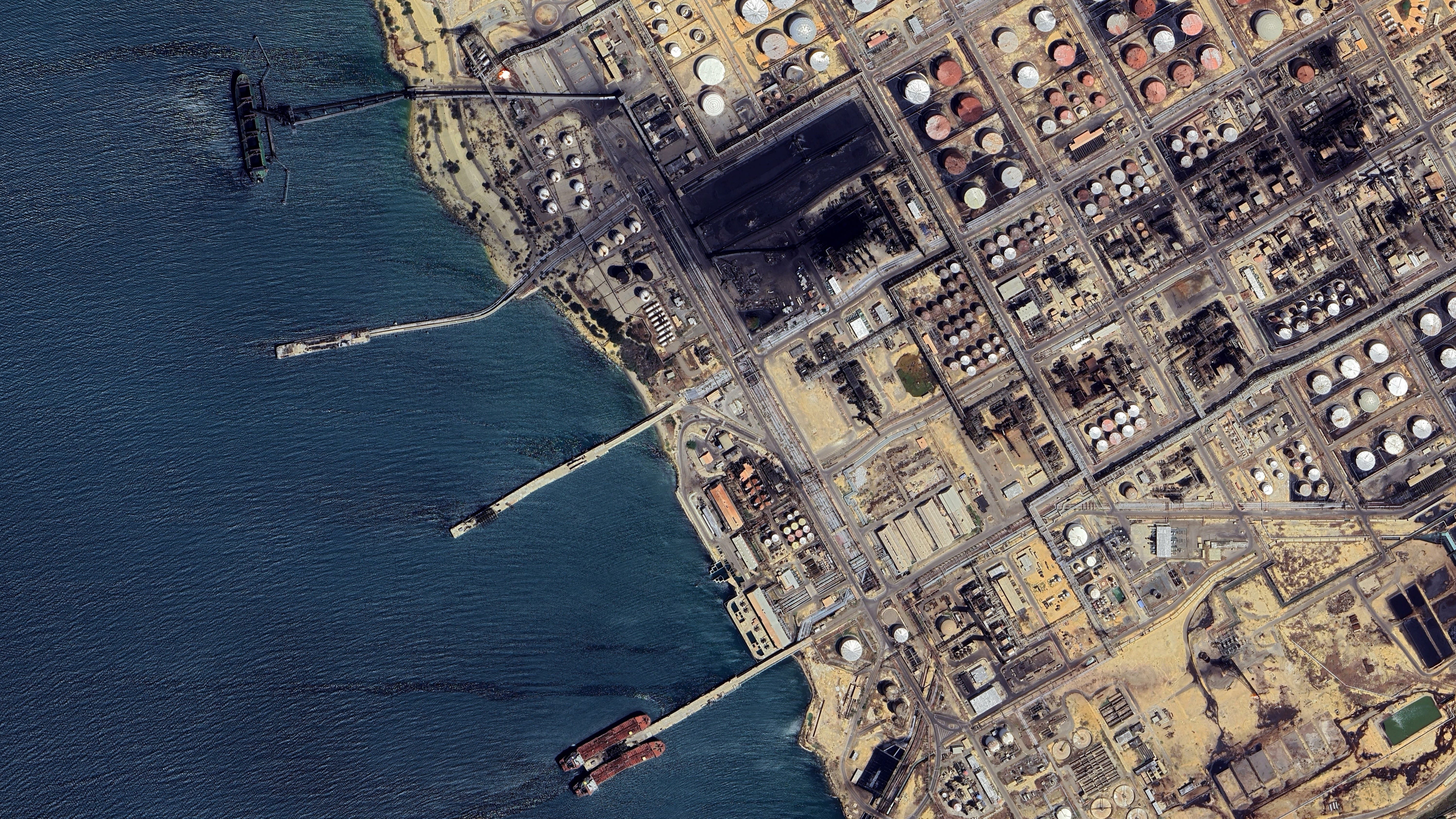
Venezuela gave oil companies until July 28 to migrate much of the country’s petroleum sector into a new legal framework. The 122-article regulation implementing that framework was not published until July 7, more than five months into the law’s 180-day transition period, with three weeks left to comply. Two days after the deadline passed, the Wall Street Journal reported that American oil majors had hit a wall.
The problem was not that Venezuela had failed to reform its oil law. It was that the reform still did not create a right capable of surviving the authorities empowered to alter it.
Reuters reported that dozens of joint ventures had moved toward new terms, but many of the agreements and permits needed to complete the transition remained unfinished. Caracas announced no formal extension, while allowing complementary agreements to be signed after the core contracts. No comprehensive public accounting has since emerged identifying which projects completed migration, on what terms, which remain unresolved, or which were revoked.
Nine days after the regulation’s stated publication date, the Venezuelan legal-monitoring organization Acceso a la Justicia reported that the text had circulated through social media and unofficial sources and that it had not located the official document in an official source. The disposition of a substantial portion of Venezuela’s contractual base — Reuters counted roughly two dozen foreign and local companies, the Venezuelan petroleum chamber counted more than thirty agreements and at least forty mixed companies — passed through one of the most consequential administrative events in the industry’s recent history without producing a comprehensive public accounting against which any investor, creditor, or counterparty could assess the result. The contracts being migrated include instruments signed under the 2020 Anti-Blockade Law, whose terms were confidential.
Even the June earthquakes slowed the process not by damaging the fields — operators including Chevron confirmed production and refining were substantially unaffected — but by closing the main airport, straining an already failing power grid, and preventing executives from reaching Caracas to complete the migration.
In Governance Warfare terms, the reserves are physical; investability is a property of administrative terrain: the legal, regulatory, financial, infrastructural, and organizational systems through which access becomes a durable asset. The ability to alter those systems by controlling permissions, dependencies, and institutional relationships is governance leverage. Venezuela’s oil is not in question. What is in question is whether the country yet possesses the terrain that turns a barrel into an asset and which authorities hold leverage over the systems that make it investable.
The Limits of Legal Reform
On January 29, 2026, Venezuela’s National Assembly approved and the acting president signed a partial reform of the Organic Hydrocarbons Law, the most significant restructuring of the sector’s legal architecture since nationalization in 1976.
Read as a term sheet, it delivers a great deal of what an international operator would ask for. Private companies domiciled in Venezuela may now execute primary activities under contract with state-owned entities. Before, private capital could participate in those activities only through joint ventures the state controlled. Minority partners may, with executive authorization, market production directly and hold bank accounts in any currency and jurisdiction. The law provides for arbitration. It provides a mechanism to restore project economics if the rules later change. It repeals the 2007 decree that forced the Orinoco associations into mixed companies in the first place.
Six months later, ExxonMobil has made no major commitment, after its chief executive called the country “uninvestable“ in January. Chevron, the only American major operating there, has pushed volumes to a record through efficiencies within its existing footprint rather than new billion-dollar commitments. The American majors are competing for the same handful of assets — Carabobo in the Orinoco, the lighter crude at El Furrial and Punta de Mata that would serve as diluent — and not closing.
There is a live commercial dispute underneath this. Reuters reported that the weighted royalty rate arising from the new hydrocarbons tax became the central contested term of the migration, with the ministry’s figures diverging from the companies’ own calculations. That is a real disagreement about price. But it is downstream of something the price cannot fix, and the statute explains what.
What the Statute Actually Does
The reform’s text, published in Gaceta Oficial N° 6.978 Extraordinario, follows a consistent pattern: it promises durable treatment while retaining the machinery of discretionary alteration.
Arbitration
Article 8 provides that parties may agree that disputes be decided by the competent courts of the Republic or through alternative mechanisms including mediation and arbitration. Its second paragraph is the operative one: the hydrocarbons ministry, consulting the Procuraduría General de la República, will fix the general guidelines governing such clauses, and clauses conforming to those guidelines no longer require the opinion or authorization otherwise mandated by the Procuraduría’s organic law and the Commercial Arbitration Law.
Three things have been blurred in public commentary and should be separated. There is statutory authorization to use arbitration. There are ministerial statements that new contracts will contain international arbitration provisions. And there is an enforceable investor right to a foreign seat, defined sovereign-immunity treatment, and an actual recovery path. The reform delivers the first. It does not deliver the third. It authorizes arbitration and delegates the operative architecture to the executive; what it streamlines is the state’s own approval process.
Nor did the July implementing regulation supply what the statute left unresolved. Article 107 again permits unresolved disputes to proceed to Venezuelan courts or through alternative mechanisms, including arbitration, but provides that those mechanisms will follow guidelines to be issued jointly by the hydrocarbons ministry and the Procuraduría. The statute required the ministry to establish the operative guidelines; the regulation restated the delegation. No separately published guidelines were identified as of writing.
Economic equilibrium
Article 26 requires contracts to preserve the economic-financial balance originally agreed, plus any subsequent benefit improving those terms, throughout the contract’s life. Where later legal, fiscal, regulatory, or contractual changes substantially harm project economics, the National Executive delegates to the ministry the adjustments needed to restore that balance through modification of royalties, taxes, tariffs, contract periods, economic conditions, or compensation mechanisms.
The statute supplies a substantive threshold — the change must negatively and substantially affect project economics — but no independent determination of whether that threshold has been met, no third-party decision-maker, and no formula. The remedy for a change in the rules is an adjustment administered by the executive whose later decisions may have produced the change. The protection and the risk share an author.
Reversion
End-of-term reversion of fixed infrastructure is ordinary in petroleum concessions worldwide. Four features here materially increase an investor’s exposure. Article 35 applies reversion when granted rights are extinguished for any cause, not only at natural expiry. What reverts is broad: lands and permanent works, installations, accessories, and equipment forming an integral part of them, together with any other goods obtained for the activities, whatever their nature or title of acquisition. It happens without indemnity; assets are delivered in ownership to the Republic, free of encumbrances, with no payment obligation. And, under Articles 35 and 43 alike, what reverts includes all data acquired, generated, processed, and interpreted.
That last item deserves attention from anyone who has priced a subsurface program. Venezuela does not merely reclaim the physical infrastructure at the end. It also claims the interpreted subsurface knowledge generated through the investor’s capital and expertise — the intellectual product that ordinarily survives a project even when the barrels disappoint. And because the statute also excludes the underlying reservoirs and sovereign resource rights from any security interest, financing remains dependent on the durability of the contractual rights, receivables, and production entitlements surrounding them.
Fiscal terms
Article 51 sets a royalty ceiling of 30 percent and empowers the executive, through the hydrocarbons ministry, to set the applicable percentage for each project by phase and to modify it within that ceiling. Article 55 defines the base of a new integrated hydrocarbons tax as monthly gross revenue with only narrow deductions; Article 56 sets its rate at up to 15 percent and permits project-by-project adjustment; Article 57 permits it to be demanded in kind or in money. The implementing regulation later supplied an aggregate rate schedule by project category. But the ministry determines how each project is classified, and the statute preserves executive authority to modify the applicable rates within their ceilings. The fiscal burden is therefore structured by rule while remaining administratively assigned at the project level and adjustable.
The law was promulgated by Delcy Rodríguez as acting president and countersigned by Rodríguez herself as acting hydrocarbons minister.
One further detail belongs here rather than in any discussion of infrastructure. Article 33 of the implementing regulation requires each operating company to secure continuous, reliable, and sufficient electricity for primary activities through self-generation or third-party contracting to guarantee operational autonomy. The rule embeds the weakness of the national grid directly into the contractual and operating design of the petroleum sector.
What the Majors Are Reading
None of this requires an executive to hold a theory about Venezuelan institutions. It requires only that he read the record.
In February, Venezuela’s oil ministry suspended nineteen production-sharing contracts signed under Nicolás Maduro. PDVSA continued selling crude from the affected projects while Caracas and Washington jointly reviewed the agreements and the credentials of the companies behind them, with some potentially subject to revocation. The portfolio included producing projects in Lake Maracaibo and expansion ventures in the Orinoco.
Any company now examining PDVSA’s circulated list of prospective agreements knows what happened to the previous cohort, and knows that the fate of an agreement can be shaped in two capitals.
The license record points the same way. Chevron operated in Venezuela under a general license issued in November 2022. In March 2025 Treasury replaced it twice in three weeks: first with an authorization permitting only wind-down through early April, then with one extending the wind-down to May 27 and stating that nothing in it authorized any expansion of the joint ventures into new fields. Non-American operators lost their export authorizations in the same period; Repsol and France’s Maurel & Prom both said theirs had been revoked. The cycle from a company-specific operating license to wind-down and then to a new class license with different eligibility and payment conditions took roughly a year. And Exxon has watched Venezuelan assets nationalized twice, in 1976 and again in 2007.
Chevron’s current behavior is the clearest available evidence of how a major reads the terrain. It has raised production to a record inside a permission it already holds, using efficiencies rather than new capital. That is precisely what a company does when it trusts the barrel and not the title.
The Washington-Caracas Seam
The administrative terrain governing a Venezuelan barrel is not solely Venezuelan. Washington governs a separate set of permissions that determine whether Venezuelan oil contracts can be performed, paid, financed, and enforced.
On June 10, 2026, the Office of Foreign Assets Control reissued a suite of Venezuela general licenses. For contracts entered into or performed in reliance on them, the laws of a state or other jurisdiction within the United States must govern questions of contract law between the parties, including interpretation, performance obligations, breach, remedies, payment, termination, validity, assignment or novation, and enforceability. A new note permits those contracts to recognize that aspects of the underlying activity in Venezuela may be subject to Venezuelan law: sovereign regulatory authority, administrative permits and licenses, concessions, labor, environmental, health and safety requirements. Dispute-resolution proceedings relating to those contracts or their breach must occur in the United States, the United Kingdom, France, or Singapore. Before the June revisions, only a US venue was permitted; OFAC added three foreign venues.
Read carefully, American law governs the agreement between the parties. Venezuelan law governs the permits and concessions that give the agreement its economic meaning. An investor could prevail on the contractual dispute under New York law and still lose the value of the arrangement through an administrative act affecting the underlying concession in Caracas: an act taken under Article 25’s ministerial revocation power, or through a rate reassignment under Article 51, or by any of the mechanisms the reform leaves in executive hands.1
The American layer is itself a permission. The governing-law requirement and the expanded choice of seat exist as conditions attached to revocable general licenses, and the underlying US sanctions authorities remain in force. Withdrawing a license would not erase a governing-law clause or dissolve an arbitral seat. It could do something more practical: foreclose whether the contract may be performed, paid, financed, serviced, or enforced against protected property absent another authorization. Washington does not need to void the instrument to make it unusable.
The same structure appears in General License 58, issued May 5. It authorizes legal, financial advisory, and consulting services connected to a potential restructuring of Venezuelan government and PDVSA debt, and requires any provider to file a copy of the signed contract with the State and Energy Departments within ten business days. It does not authorize the restructuring, transfer, or settlement of that debt, direct negotiations with creditors, or the enforcement of any lien, judgment, or arbitral award through process affecting blocked property. The diagnosis is licensed. The cure is withheld.
An asset in Venezuela therefore depends on three overlapping systems: the contractual rights between the parties, the Venezuelan administrative apparatus governing the concession, and the American permissions regime governing whether transactions may lawfully occur. A major is not pricing political risk in the ordinary sense. It is assessing whether the asset can remain intact across all three, two of which are sovereign and neither of which it can fully contract around.
Options Are Not Assets
The conventional reading of the impasse is that reckless small firms will accept risk that cautious majors will not. The record does not support it.
The newcomers now entering Venezuela — foreign wildcatters and little-known firms, including units of Crossover Energy and Hunt Oil — signed preliminary agreements that are non-binding, and face no deadline for converting them into contracts. Nor is the pattern confined to the speculative end. In June, Repsol, present in Venezuela continuously since 1993, signed a memorandum of understanding with the hydrocarbons ministry and PDVSA to assess potential development of the Horcón area southeast of Lake Maracaibo, with the parties expressing an intention to study offshore opportunities.
These preliminary instruments do not themselves provide durable access. What differs is who can afford to hold one while waiting.
A non-binding preliminary agreement over Venezuelan acreage requires comparatively little capital commitment to carry. It is also insufficient by itself for booking a reserve, raising project finance, satisfying a reserves auditor, or defending a multi-decade commitment to a board. A wildcatter may be able to carry an option; a major has to underwrite a reserve.
That yields a diagnostic anyone can run without access to the negotiations. Venezuela currently allows companies to reserve possibilities. It does not yet give them enough certainty to underwrite assets. The kind of firm willing to sign — and the kind of instrument it is willing to sign — is therefore evidence of what the investment environment can actually support.
How Temporary Deals Become Permanent
The reform declares contractual transparency and accountability among its governing principles. It also exempts the sector from the system that would ordinarily enforce them. Article 34 excludes mixed companies from the Public Contracting Law and its regulations, requiring instead that they implement transparent contracting mechanisms consistent with principles of honesty, efficiency, equality, planning, publicity, and simplification. Article 40 excludes the new private-company contracting from the same law.
This does not by itself establish corrupt or patronage-based allocation. What it establishes is that the framework substitutes internally designed procedures for the ordinary public-procurement regime and its external procedural constraints. Transparency remains an obligation; its procedures are largely left to the actors conducting the transactions.
Around that sits a second layer. American access is itself allocated administratively: sometimes through general authorizations carrying eligibility conditions, sometimes through licenses naming a specific counterparty, as with the authorization covering Repsol and its subsidiaries, and sometimes not at all, leaving activity prohibited absent specific authorization. Two layers of discretionary access: bilateral allocation in Caracas, and an American permissions regime that can authorize generally, conditionally, or by name.
The predictable consequence is not corruption but incumbency. Once firms incur costs, hire, mobilize equipment, establish ministerial relationships, and begin operating under bespoke agreements, they acquire a direct interest in protecting those rights against later tender, review, or renegotiation. The transitional arrangement can therefore create the constituency capable of making itself permanent: firms with a direct interest in preventing its replacement by more transparent rules.
What Would Make the Sector Investable
If the objective is durable investment rather than incremental barrels, four things have to change. Each requires a different actor, instrument, sequence, and tradeoff.
Protect the revenue from creditor seizure.
Venezuelan petroleum revenue is exposed to creditor claims and attachment risk, and the mechanism is not theoretical. In 2018, enforcing an arbitration award, ConocoPhillips obtained writs of attachment against PDVSA inventories, terminals, and cargoes in the Caribbean, disrupting flows equal to roughly a third of the country’s exports until PDVSA settled and Conoco suspended enforcement for as long as payments continued. Conoco’s claims have since grown past $11 billion, and a Delaware court has ordered the sale of Citgo’s parent to satisfy creditors. Washington’s answer in 2026 was an executive order declaring a national emergency on the grounds that attachments against designated deposit funds would threaten national security. That order may be effective and may be necessary. It is not a settlement. Washington has created an attachment-protected route from Venezuelan oil sales into designated accounts; it has not eliminated the claims that made such protection necessary. The actors are Washington, Caracas, and the creditor classes; the instruments are the restructuring authorization currently withheld under General License 58, a negotiated standstill, and a defined revenue waterfall. This must precede large-scale project finance, because no lender can treat a revenue stream whose protection rests on a revocable emergency declaration as durable collateral. The cost is surrendering some of Washington’s ability to determine creditor access case by case.
Make American permissions predictable.
The entire opening rests on general licenses issued against authorities that remain in force, revocable by executive action, with a demonstrated history of revocation. The actor is the executive branch through the Treasury. The instrument is not blanket relief but structure: defined eligibility criteria, published standards for revocation, minimum notice periods, and wind-down protections that survive a policy change. This must exist before a board can treat a license as the foundation for multi-decade capital. The cost is transaction-level optionality, the ability to adjust a company’s access as leverage in an unrelated negotiation.
Replace private allocation with published procedure.
Currently, acreage moves through private offerings in Caracas and a US permissions regime capable of authorizing entry generally, conditionally, or by named counterparty, under a statute that exempts the transactions from public procurement. The actors are the hydrocarbons ministry and PDVSA, with Washington holding a lever through counterparty approval. The instruments are published acreage, published model terms, published awards, and a licensing round rather than bilateral offerings. This must come before the incumbency described above sets, because re-tendering allocated acreage becomes politically harder every month it stays allocated. The cost to Caracas is speed; the cost to Washington is the ability to shape who enters.
Make dispute resolution survive a change of authority.
Article 8 lays out arbitration whose operative architecture is left to ministerial guideline, without a guaranteed foreign seat, immunity treatment, or recovery path. The actors are the ministry and the Procuraduría, with the shape of what is permissible constrained by the American licensing conditions on governing law and seat. The instrument is a published dispute-resolution standard specifying seat, applicable rules, immunity treatment, and the asset pool against which an award can be enforced and, unavoidably, advance treatment of what happens to contracts signed by an interim government the United States has formally recognized but whose political succession remains unresolved. This cannot be deferred, because every other conversion is only as durable as the forum and asset base through which it can be enforced.
The Price of Durability
There is a catch: these changes would constrain Washington’s own freedom of action.
The same discretionary architecture that gives governments leverage and firms tailored access is among the conditions preventing access from becoming durable. Predictable rules would supply the durability major investors require. They would also constrain Washington’s ability to exercise leverage transaction by transaction. Individual firms can rationally negotiate bespoke protections within that system while still declining to treat the system itself as durable enough for long-horizon capital. Creating durable investment therefore requires giving up some case-by-case control in exchange for rules investors can rely on. The choice is not between leverage and no leverage. It is between discretionary leverage and leverage institutionalized in the terrain itself. The contradiction is structural, not motivational.
Current policy has so far preserved speed, control, and flexibility, even where doing so limits the durability major investors require. Caracas has built a framework that promises stability while retaining the power to change the terms at nearly every point where an investor would want a binding constraint. Washington has built a permissions regime that can make those arrangements performable, payable, and enforceable for as long as Washington continues to permit them.
The result is a sector capable of producing memoranda, preliminary agreements, non-binding options, and selected transactions. It is less clearly capable of producing rights that survive the authorities now granting them.
Maduro’s removal changed who occupied the presidency. It did not determine the rules under which the sector would operate next. Those rules are being written now, in migration documents that are not publicly available, under a statute promulgated by an acting president who countersigned it as her own hydrocarbons minister, inside a permissions architecture that another government can withdraw. The barrels may come. What has not yet been built is the thing that would make them worth a decade of capital: a right that outlives the authority that granted it.
José Ignacio Hernández has separately identified unresolved conflicts between OFAC’s contract-law requirements and Venezuelan public law, the subordination of contractual rights to ministerial authority under the July regulation, including his argument that the regulation implicitly limits the inclusion of international-arbitration clauses, and the transition-related limits on investor protection. This essay treats those legal frictions as elements of a broader operating system that also includes American license revocability, creditor enforcement, investor behavior, and the political effects of transitional allocation.