

Sanctions Are Terrain
What Russia's shadow fleet reveals about the real competition in economic coercion.

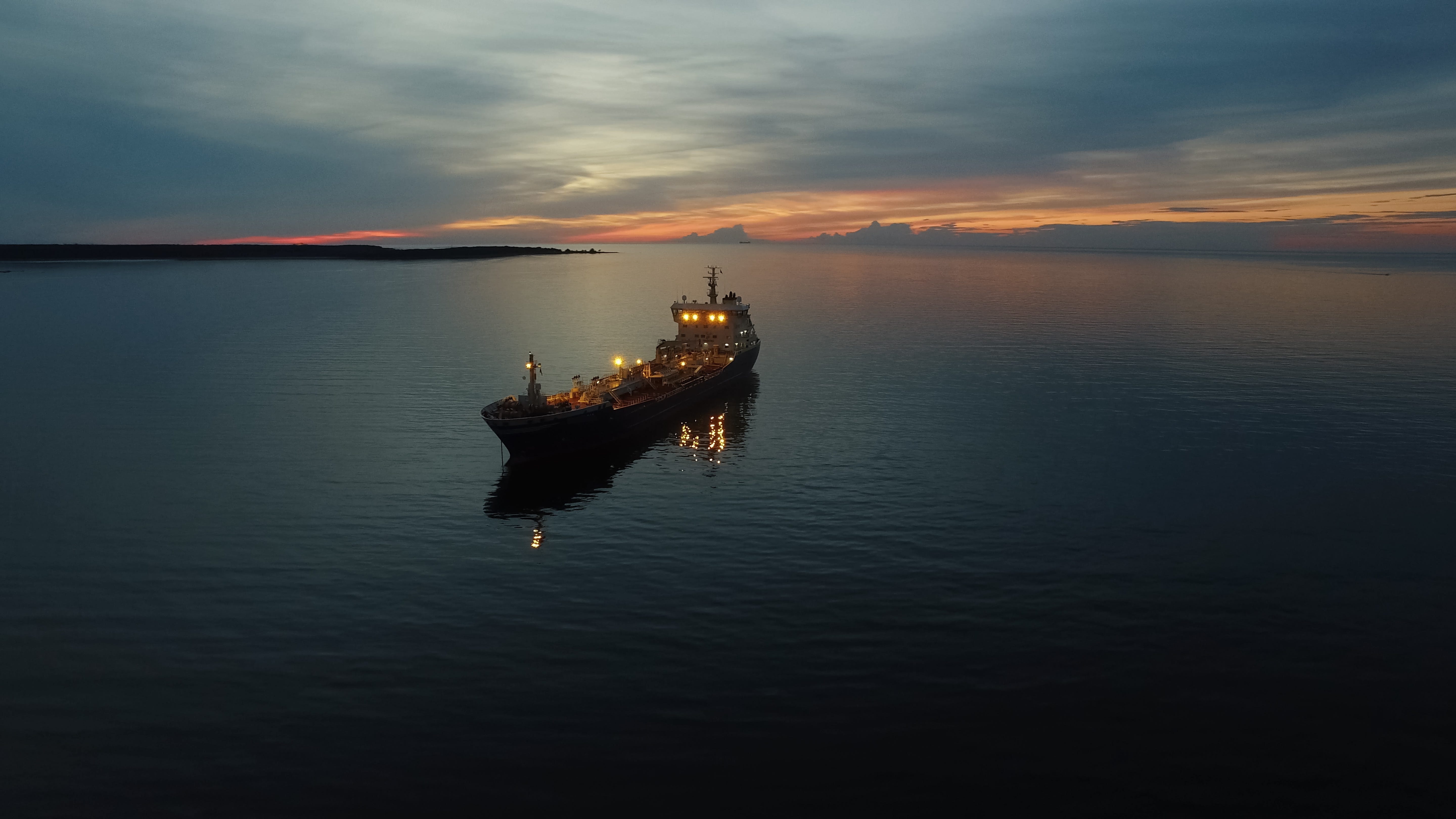
For roughly two decades, US sanctions worked because they were hardwired into the structure of global economic life. The mechanism was architectural. Dollar clearing, SWIFT messaging, Western marine insurance, correspondent banking, port-state registries, and flag-state compliance frameworks formed an integrated administrative surface through which the overwhelming majority of cross-border economic activity moved. Anyone shipping oil, settling a transaction, or insuring a cargo crossed this ground.
The coercive power of sanctions came from that structural position. Washington could freeze assets, block payments, or deny insurance because the systems that processed global commerce were systems the United States and its allies controlled. A company buying Iranian crude in 2013 faced a notional choice, but the architecture made only one answer rational. Losing access to the dollar, to Western banks, and to an insurance market that covered roughly 90 percent of the world’s ocean-going tonnage through the International Group of P&I Clubs was a cost almost no commercial actor would absorb voluntarily.
Sanctions worked because compliance was embedded in the architecture. Enforcement was largely invisible because the terrain itself did the work.
How Terrain Gets Contested
The G-7 oil price cap shows how quickly a sanctions tool loses leverage once adversaries begin contesting the terrain underneath it.
The cap tried to convert the most quietly powerful piece of energy-market infrastructure, marine insurance, into a sanctions lever. Western P&I clubs covered the overwhelming majority of the world’s tanker fleet. The coalition conditioned continued access to Western shipping services, insurance, and financing on Russian crude selling at or below 60 dollars per barrel. The design was elegant. It aimed to keep Russian oil flowing (preventing a supply shock) while capping Moscow’s revenue (limiting war financing). The leverage came entirely from terrain control. If you wanted Western insurance, you played by the pricing rules.
Faced with the cap, Russia chose the structural option: construct a parallel logistics system from the waterline up. Starting in mid-2022, Moscow assembled a dedicated tanker fleet estimated at 600 to 700 vessels through a purchasing campaign that cost between 10 and 14 billion dollars. Follow the Money and OCCRP documented at least 230 of these tankers sold by Western shipowners, including 127 sold by Greek companies for nearly 4 billion dollars. By early 2026, this fleet carried the majority of Russian seaborne crude exports.
To make the shadow fleet viable, Russia had to replicate the insurance layer the cap depended on. Moscow stood up domestic P&I coverage through Ingosstrakh, Sogaz, AlfaStrakhovanie, and several smaller firms, backstopped by the Russian National Reinsurance Company, whose capitalization was quadrupled in March 2022. These providers replaced only a fraction of what the International Group offers. A KSE Institute study found that among tankers carrying over five million barrels of Russian crude in 2024, zero percent had IG coverage and over 92 percent had unknown or unidentifiable insurers. India approved 11 Russian insurers for vessels calling at Indian ports, creating a regulatory bridge between the parallel system and a major destination market.
Flag-state registries completed the logistics architecture. As Western pressure mounted on traditional open registries, shadow-fleet tankers cascaded through Gabon, Comoros, Cameroon, and Sierra Leone. When those registries came under sanctions scrutiny, Russia began reflagging vessels under its own flag, jumping from 3 percent of the shadow fleet in May 2025 to 21 percent by February 2026.
China supplied the demand that turned Russia’s parallel architecture from a stopgap into a viable system. Small independent refineries in Shandong province called “teapots” absorbed roughly 90 percent of Iranian crude exports to China and became major buyers of discounted Russian and Venezuelan crude. Since 2025, Treasury has sanctioned a set of China-based teapot refineries and associated port and logistics operators for processing Iranian crude, and all have remained operational. China’s Cross-Border Interbank Payment System processed a single-day record of 1.22 trillion yuan across 42,000 transactions in March 2026, providing the settlement layer for transactions that had moved off dollar rails.
The numbers make clear that the cap’s leverage eroded as Russia’s parallel system scaled. The International Group itself, in testimony to the UK Parliament, described the cap’s attestation system as flawed, noting that roughly 800 tankers had already left IG clubs. Urals crude traded above the 60 dollar cap on approximately 75 percent of trading days since implementation. The EU lowered the cap twice, reaching $44.10 per barrel in early 2026. Still, Russia’s oil export revenues reached around 160 billion dollars in 2025.
The cap is a case study in a broader pattern: once adversaries can replicate the administrative terrain a sanctions tool relies on, design quality matters less than who controls the architecture. The terrain it depended on was contestable, and an adversary with sufficient capital set out to rebuild it. Ships, insurers, registries, banks, settlement systems: Russia and its commercial partners assembled a parallel administrative geography that replicated the functions of the architecture the cap was designed to leverage. The question this raises is structural. When the administrative architecture that underwrites a coercive instrument can be replicated at scale, the instrument’s effectiveness becomes a function of terrain control rather than policy design.
The US Navy As Structural Indicator
Through a terrain lens, the Trump administration’s shift to kinetic enforcement in late 2025 reads as an admission that administrative leverage had eroded.
The US Navy and Coast Guard have seized multiple sanctioned tankers carrying Venezuelan and Iranian crude under Operation Southern Spear since December 2025, deploying the USS Gerald R. Ford carrier strike group to the Caribbean as part of an overt campaign against the shadow fleet. India seized three US-sanctioned Iranian tankers off Mumbai in February 2026. European states detained shadow-fleet vessels across the Baltic, English Channel, and North Sea. Russia responded by deploying naval corvettes to escort sanctioned tankers through the English Channel.
Peter Harrell has described this shift as “hybrid economic warfare” and called for a doctrine to guide when the United States uses sanctions, when it uses force, and the legal basis for each. Emily Kilcrease has argued that the United States needs an economic-pressure doctrine built on the recognition that “target adaptation is inevitable and strategically consequential.”
Both contributions diagnose the operational problem precisely, but the structural implication runs one step further. The transition from sanctions to seizures is readable as a terrain indicator. When administrative architecture holds, compliance is embedded and enforcement is invisible. When that architecture fractures, enforcement requires physical force. The navy is the observable signal of terrain loss, the kinetic substitute for administrative control that the architecture once provided passively.
The Doctrine Question Reframed
The call for doctrine is right, but the axis it organizes around – tools or terrain – will determine how useful it is.
If the competition is framed as a contest of instruments, the response will default to better toolkits and cleaner rules of engagement. If the competition is over terrain, the questions shift. Which administrative architectures remain under US and allied control? Which are actively contested? Which have already been replicated by adversaries operating entirely outside them?
American economic coercion rests on structural positions in global networks, on the way those positions turn into coercive instruments, and on the fact that repeated use of that leverage pushes targets to build alternatives. The existing sanctions literature has traced each of these dynamics. The step that remains is to recognize that the competition over sanctions effectiveness has become a competition over who controls the administrative systems through which economic activity moves.
A serious doctrine for economic coercion has to be built on terrain, not instrument categories, and it starts with a different set of questions: what ground is held, what ground is contested, what ground can still be built? The pattern visible in the sanctions case – parallel construction as the primary competitive move and kinetic enforcement as the indicator of terrain loss – operates across every domain where governance architecture is contested. Sanctions are the most empirically documented example. The same structural logic is already visible in others.