

Why Military Solutions Substitute Poorly for Administrative Ones
Force produces effects. Administrative systems determine outcomes.

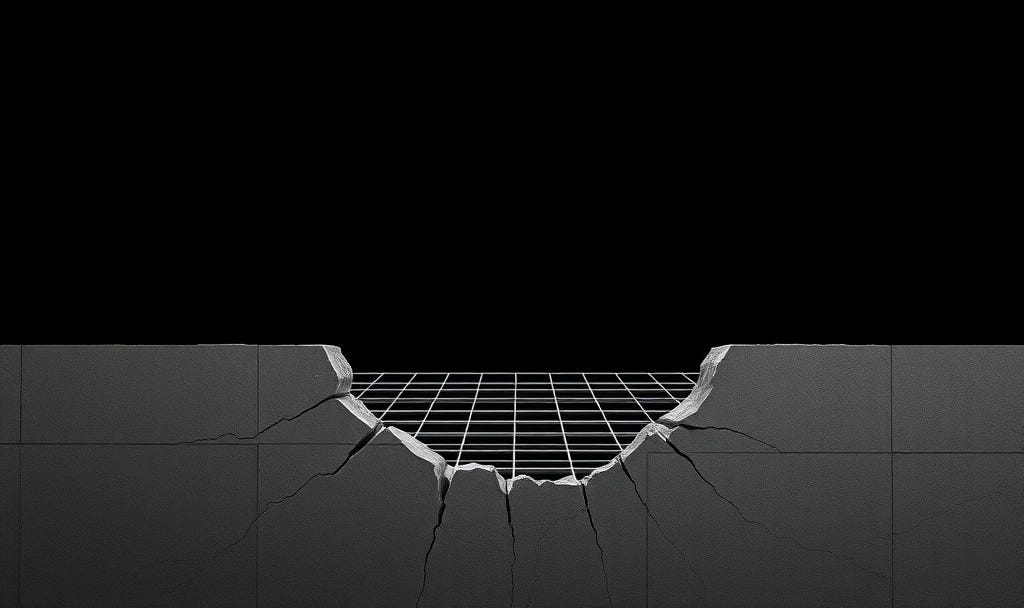
Policy debates often turn to military force when other instruments appear to stall. When sanctions fail to produce behavioral change, when negotiations cycle without resolution, or when institutional reforms generate activity without altering outcomes, the appeal of force sharpens. It offers clarity. It promises decisiveness. It appears to operate outside the slow absorption dynamics that complicate other tools.
Yet a familiar pattern follows. Military action produces visible effects — territory contested, infrastructure degraded, actors removed — while the underlying conditions that shaped the problem remain largely intact. The system adapts. Authority reconstitutes. Control is reasserted through channels that were never the object of force.
The question is not whether military force is effective. It clearly is within its domain. The question is why outcomes produced through force so often fail to translate into durable strategic change.
The answer lies in a recurring substitution error: treating military action as a stand-in for administrative functions.
The Structure of the Substitution
Military force is designed to compel, disrupt, and deny. It operates through concentration of effort, producing effects that are immediate, visible, and often decisive within a defined scope.
Governing structures operate differently. They organize authority, distribute resources, define legitimacy, and shape how decisions are made over time. Their effects are continuous rather than episodic. They do not produce moments. They produce conditions.
When force is used as a substitute for administration, these differences matter.
Force creates space. Administration determines what fills it.
Military action can remove actors from a system. It cannot determine how authority is reorganized afterward. It can degrade infrastructure. It cannot define how resources are redistributed once disruption stabilizes or how the costs it imposes are interpreted and absorbed inside the system.
As a result, force interacts with these systems asymmetrically. It produces shocks that those systems are structured to absorb.
Absorption, Not Resolution
Institutional systems rarely meet force on its own terms. They do not need to.
They reclassify losses, redistribute pressure internally, and convert disruption into narratives that reinforce rather than undermine authority. What appears externally as damage can function internally as consolidation, particularly when the system’s primary objective is durability rather than efficiency or compliance.
When force opens a vacuum, it is not filled randomly. It is filled by whoever already controls the instruments of institutional continuity: bureaucratic access, legal authority, economic distribution, narrative production. In most cases, that is not the actor deploying force.
This dynamic mirrors what appears in other domains. Policy tools introduced into misaligned systems generate administrative activity without altering underlying incentives. Military force arrives through a different mechanism, but it encounters the same structural response. Disruption is gradually incorporated into the system’s existing logic.
Over time, the distinction between disruption and stability becomes difficult to observe. The system continues to function, often with its core structures intact.
This pattern is visible in environments where military disruption does not translate into control over governance: actors are removed and territory is contested, yet authority reconstitutes through administrative, legal, and economic channels that were never the object of force.
When Escalation Meets Absorption
When force does not produce the expected outcome, the default response is often to increase it. Escalation carries an intuitive logic: greater pressure should produce greater effect.
But this logic assumes that the system receiving that pressure responds in a linear way. Administrative systems do not.
They extend timelines, diffuse costs, shift burdens across actors, and convert external pressure into internal justification. Force can be escalated faster than an adversary can build legitimacy. But legitimacy compounds quietly, and it outlasts pressure. Escalation and absorption operate on different timelines, and the slower curve tends to win.
Under these conditions, escalation can intensify activity without altering trajectory. The system absorbs and persists.
This does not reflect a failure of resolve or capability. It reflects a mismatch between the form of pressure applied and the structure of the system receiving it.
Why the Substitution Is Structurally Incentivized
This substitution persists for reasons that are not difficult to identify.
Military action is legible. It produces observable effects, clear timelines, and metrics that can be tracked and evaluated. It fits within institutional structures designed to authorize, execute, and assess discrete operations.
Institutional apparatus is less visible. Its effects accumulate over time. Its mechanisms are embedded in procedures, authorities, and relationships that do not present themselves as singular events.
As a result, force becomes the instrument through which institutions act on problems they cannot otherwise engage directly. It offers a way to intervene without operating inside the structures that are actually shaping outcomes.
The substitution is not accidental. It is structurally incentivized.
What Force Cannot Perform
The limits of force become clear when it is tasked with functions it was never designed to perform.
Force cannot generate legitimacy within a system it does not administer. It cannot sustain compliance without continuous presence. It cannot resolve contests over authority that are embedded in legal, bureaucratic, and economic structures. It cannot determine how systems reorganize after disruption.
Most importantly, it cannot outlast administrative systems organized around their own continuity.
The recurring pattern is not strategic failure in any general sense. It is the repeated assignment of force to produce outcomes determined elsewhere.
The Gap Between Effect and Outcome
Military action creates effects that are immediate and visible. Administrative systems shape outcomes that are continuous and durable.
When one is used as a substitute for the other, the result is a persistent gap between what appears to change and what actually does.
Until that gap is recognized, force will continue to feel decisive in the moment, while the systems it is meant to influence absorb, adapt, and endure beyond it.
Once again, you so very competently and insightfully outline "the big picture" as it pertains to international conflicts. What I, as an uninformed layperson, am repeatedly left wondering is whether or not alleged professionals within our nation's State and other departments are similarly cognizant of the points you so accurately raise and describe. Surely someone in the top echelons of governance and policy making must be aware of the differences in using military might over more subtle regime change protocols. Then again, perhaps not. It would seem that "might makes right" only to a very limited degree and more effectual means of dealing with real or perceived enemies must include more than mere bombardment and war.