

Field Observation: Kharg Is Not the Problem
Why the focus on Iran’s main oil terminal reveals a deeper strategic misalignment

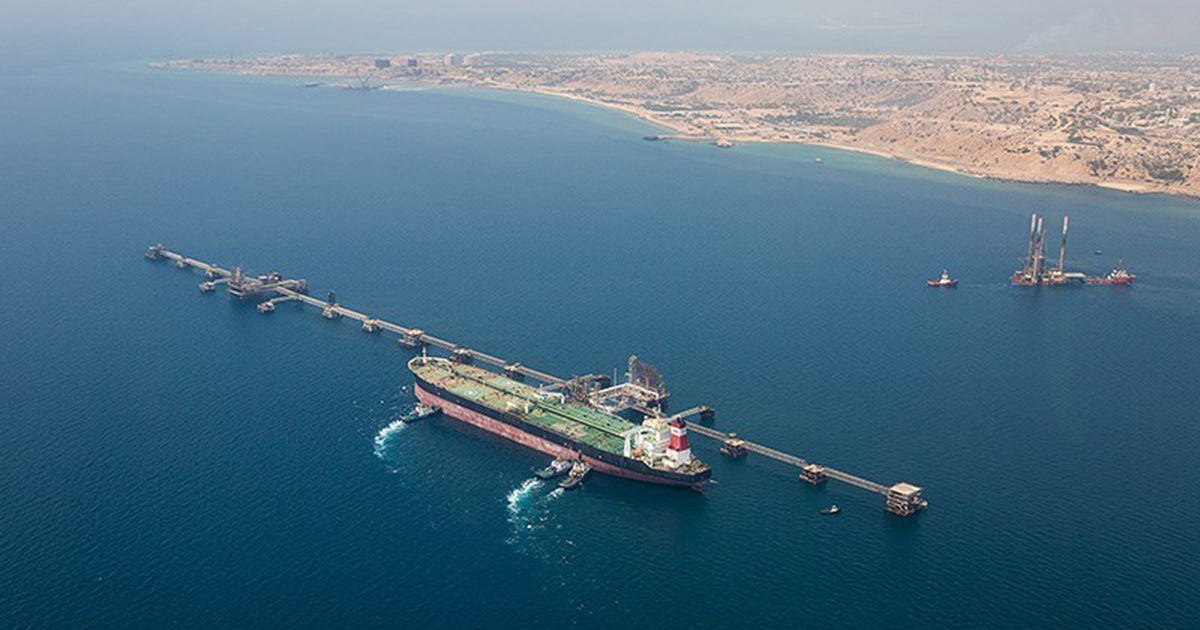
The United States has reportedly prepared contingency plans to strike or seize Kharg Island, Iran’s primary oil export terminal, which handles the overwhelming majority of the country’s crude exports. On March 29, President Trump told the Financial Times he was considering taking the island by force — “We could take it very easily,” he said — while the administration simultaneously maintains an April 6 ultimatum: reopen the Strait of Hormuz or face renewed attacks on Iran’s energy infrastructure.
That deadline is worth examining on its own terms. April 6 is the third iteration. The original threshold was March 23, extended to March 28, now extended again. A deadline extended twice is not a deadline. It is a negotiating posture, and a revealing one. The coercive architecture had already signaled its own limits before the pressure was applied.
The logic is straightforward: remove the revenue node, collapse the regime’s ability to finance coercion, force a change in behavior.
It is also incomplete.
Kharg looks like a decisive target because it concentrates output. It is visible, finite, and legible within a familiar model of strategic pressure: identify the critical node, apply force, degrade capacity. In that model, Kharg is not just a target; it is the target.
But the prominence of Kharg reflects how the problem is being framed, not how power is actually being generated.
Iran’s leverage does not originate on the island. It is organized across a system: maritime access control in the Strait of Hormuz, sanctions-evasion networks that move and disguise oil after it leaves port, proxy forces that expand escalation pathways, and domestic structures that convert external pressure into regime consolidation. Kharg is one component in that system. It is not the system itself.
Removing a node does not dismantle the architecture that produces leverage. It forces the system to re-route.
That re-routing is not neutral. It shifts pressure into adjacent domains where Iran already holds asymmetric advantages.
This is where the current moment becomes structurally contradictory.
The United States is attempting to compel Iran to reopen the Strait of Hormuz while simultaneously preparing actions that would increase the strategic value of controlling it. Disrupting exports from Kharg raises the importance of maritime passage as an alternative channel for leverage. It elevates the role of shipping risk, insurance, and transit permissions — areas where Iran can impose friction without requiring territorial control. It expands the utility of proxy escalation, where costs can be imposed indirectly and attribution remains contested.
Notably, the US has already struck Kharg’s military defenses while deliberately sparing the oil infrastructure, a distinction that reveals the tension inside the strategy itself. The target is being managed, not decided. That is not a plan. It is improvisation inside a system that hasn’t been fully mapped.
In effect, the pressure applied at Kharg reinforces the very domain the ultimatum is trying to stabilize.
Kharg is not just a target. It is a pivot point.
Taking or destroying it may degrade Iran’s revenue in the near term. But it does not remove the mechanisms through which Iran converts geography, law, and access into power. Those mechanisms will reconfigure around the Strait, not disappear with the island.
The strategic error is not the identification of Kharg as important. It is the assumption that importance at the node translates into control over the system.
This is a misalignment between how pressure is applied and where leverage is produced. The problem is not insufficient force against a critical target. The problem is treating a governance system as if it were a collection of targets.
This is what it looks like when a military solution is applied to an administrative problem.