

What Ceasefires Cannot Settle
The administrative conditions of a durable end to the Iran war

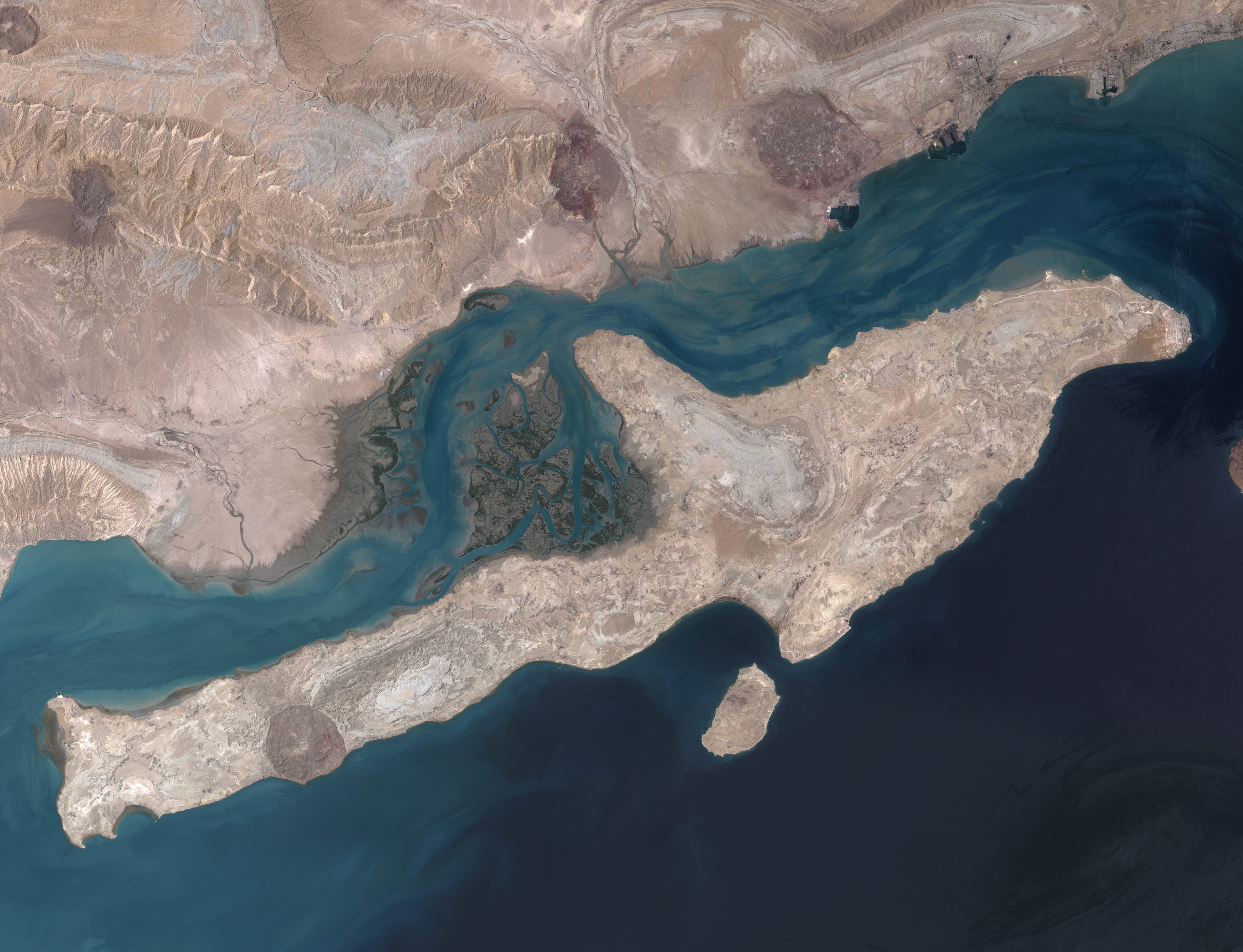
Talks between Iranian and Omani deputy foreign ministers concluded in Tehran at the end of July with constructive language about operational mechanisms for safe passage through the Strait of Hormuz, but no change in the status of maritime traffic. Washington says negotiations are proceeding through technical and senior-level channels, while the American military remains, in the phrasing of the moment, locked and loaded. Strikes have paused. The strait remains closed.
This is the fourth such pause in five months. A two-week ceasefire mediated by Pakistan took effect on April 8; the Islamabad talks convened three days later and failed within two, after which the United States imposed a naval blockade. A memorandum of understanding in June sought to reopen the strait and end the war. The ceasefire that followed collapsed on July 7, after three vessels were attacked and American strikes resumed. Each arrangement stopped the fighting. None established the conditions necessary to prevent its resumption.
Last week, I argued that wars end durably when the governance architecture surrounding a settlement can enforce its terms without continuous outside intervention. Iran presents the harder case: much of the terrain any settlement would need to govern remains under Iranian control, while the institutions capable of implementing an agreement are not necessarily the ones conducting the negotiations.
Two Forms of Durable War Termination
At the governance layer, durable war endings take one of two forms.
The first is governance consolidation. One system displaces the other, and the conflict ends because the competing administrative orders no longer occupy the same ground. The Vietnam War ended this way, through a political order imposed after the Paris Accords had already failed.
The second is governance stabilization. Competing systems persist, and an enforceable operating boundary is established between them. Korea is the classic form: a recognized line, two administrative orders, an armistice mechanism, external guarantors, and a cost of overturning the arrangement high enough to deter renewed conflict. The sovereignty dispute was never resolved. It was made governable.
The distinction reveals a broader principle. A conclusive loser is not required for a durable ending. A conclusive answer to who governs what, under which rules, through which procedures, and with what consequences is. Stalemates become settlements when uncertainty is removed from the administrative layer, and overwhelming military superiority fails to end conflicts when jurisdiction, access, recognition, and enforcement remain contested.
Governance consolidation is unavailable to Washington in Iran. It would require replacing the Iranian system and administering whatever followed. Five months of strikes have brought the United States no closer to that outcome, and no American plan has proposed it. Stabilization is therefore the only mechanism in play. The question is what such stabilization would require.
Iran Requires a Non-Territorial Settlement
Korean stabilization was territorial. A line on a map organized everything else: which system governed which population, where enforcement applied, what constituted violation.
The Iranian dispute offers no line to draw. Its contested terrain consists of commercial passage, insurance and vessel documentation, oil export permissions, sanctions and frozen assets, nuclear monitoring, proxy activity, attacks on regional infrastructure, verification, and the rules governing retaliation. These are administrative questions. A settlement that answered them would function as an operating regime rather than a border.
No single actor controls that terrain, a fact conventional analysis of the war has consistently ignored. Iran holds disruption and denial capacity. The United States holds contestation and punishment capacity. Shipowners decide whether to sail, insurers decide whether to cover the voyage, ports decide whether to receive the cargo, and banks decide whether to clear the transaction. Commercial traffic through the strait fell by roughly ninety percent after the outbreak of fighting. The June memorandum produced the war’s only recovery, which held for three weeks: inbound transits reached their highest level since the war began in early July, then fell back to single digits within days of the ceasefire’s collapse.
Traffic that continues to move has largely left the internationally recognized traffic regime. Of 895 crossings tracked between March and mid-May, only 6 percent used the internationally designated traffic separation scheme; 53 percent used the corridor Iran defined, while the remaining crossings involved vessels operating with their transponders disabled.
A strait is open when vessels transit under predictable legal, security, and insurance conditions. Naval declarations do not produce those conditions, and neither does a signed cessation of hostilities. Any settlement must therefore define how that divided control will operate. Four agreements have acknowledged the problem without establishing the rules.
Representation and Binding Authority
Most analysis of the negotiations has treated authority as a question of rank and proximity: are the Iranian officials at the table senior enough, close enough to the leadership, or formally empowered to speak for Tehran? Those are questions of representational authority. They do not establish whether the negotiators control the institutions that must carry out the agreement. An official may be empowered to negotiate and sign an agreement without being able to direct the Guard, regulate maritime passage, restrain proxy forces, or compel compliance across the Iranian system. Administrative analysis therefore asks not only who can conclude an agreement, but who can compel the institutions responsible for carrying it out.
The same institutional problem shaped the opening phase of the war. In a March analysis of the decapitation campaign, I argued that Iranian authority was embedded rather than personal, distributed across clerical legitimacy, Guard enforcement, and administrative control, with the Guard consolidating as the system’s primary executor. The same institutional structure that frustrated the decapitation campaign now complicates a settlement. Negotiations turn on more than who speaks for Iran. They turn on who can compel the military and administrative structures responsible for implementation to comply.
Iran’s April ceasefire statement indicated where that authority sits. The Supreme National Security Council text accepting the two-week ceasefire specified controlled passage through the strait in coordination with Iran’s armed forces, making military participation a condition of the transit mechanism, not merely a matter of executing terms negotiated elsewhere. The Revolutionary Guard has directed wartime decisions throughout, with operational choices made at commander level. When the Council’s secretary was killed in strikes, the secretariat passed to a career Guard officer drawn from the same intelligence and special operations structures the negotiations were seeking to constrain.
The observation has since become common enough to appear in wire coverage of the July collapse, usually in the form of a complaint that Tehran negotiates in bad faith or that the wrong officials were at the table. The broader institutional problem has received less attention. The authority to represent a state and the authority to bind its institutions do not necessarily reside in the same hands. An agreement concluded by someone who possesses the first but not the second remains structurally fragile, regardless of the negotiator’s good faith. That condition recurs wherever the signatory does not control the machinery of execution: proxy systems, fragmented governments, coalition warfare, federal arrangements, and civil wars concluded by parties who cannot demobilize their own forces.
What a Settlement Would Have to Govern
The agreements reached so far stopped the fighting without settling the categories that determine whether fighting resumes. The June memorandum is the clearest instance. Its first stage obliged the United States to lift the naval blockade and obliged Iran to arrange safe passage through the strait, a requirement naming no institution, no procedure, and no means of verification. The American obligation was a discrete act. The Iranian obligation was a governance function assigned to no institution in particular, and the arrangement failed within three weeks.
An enforceable arrangement would have to do seven things:
Identify, on each side, the institutions capable of compelling compliance from the forces that implement the agreement. Where that identification is absent, diplomatic consent may not produce compliance, and every commander who declines to comply becomes an ambiguity rather than a violation.
Specify the rules of commercial passage: documentation, inspection, routing, escort, and the treatment of vessels that decline Iranian procedures. Where those rules are absent, every disputed interception becomes a candidate act of war, adjudicated in real time by the parties least able to be impartial about it.
Define the treatment of Iranian oil exports, sanctions relief, and frozen assets against a compliance schedule. Where the schedule is absent, compliance has no measurable content, and both parties assess performance against expectations the other never accepted.
Sequence the nuclear question separately from immediate war termination while linking the two tracks. Where the questions are merged, the hardest problem in the relationship determines the fate of the most urgent one.
State which regional attacks fall inside the agreement, including those conducted by forces Tehran supports without directing. Where coverage is undefined, proxy attacks remain a deniable route back to escalation.
Designate who verifies violations and through what mechanism. Where verification is absent, violations become contested claims, and the party with the stronger information operation wins the argument regardless of the facts.
Attach predetermined consequences to defined breaches, proportioned to their severity. Where consequences are unspecified, enforcement becomes another round of bargaining conducted under fire, and each incident is litigated as a referendum on the entire arrangement rather than as an event the arrangement anticipated.
Four cessations of hostilities have failed because they stopped the fighting without establishing the institutions, procedures, and enforcement required to end the war.
The Terrain a Settlement Would Leave
Even a workable agreement could not eliminate the underlying dependence on the Strait of Hormuz.
Roughly twenty million barrels per day of crude and refined product moved through the strait in 2025. Existing bypass capacity across the Saudi and Emirati pipelines runs between 3.5 and 5.5 million barrels per day, and both systems have been operating at or near their ceilings since the spring. The largest addition under construction, an Emirati line to Fujairah designed to add over a million barrels per day, stood at roughly half complete in mid-2026 with operation targeted for 2027. Analyst projections of meaningful aggregate relief extend to 2028.
The arithmetic sets the terms. A settlement could regulate Iran’s exercise of denial power, define its limits, and attach costs to its misuse. The underlying dependence on Hormuz would remain, because the infrastructure needed to disperse it operates on a construction schedule rather than a diplomatic one.
The war therefore presents two distinct problems that Washington has repeatedly conflated. Ending the current war requires governing the terrain that exists now. Reducing Iran’s leverage over the long term requires changing the terrain on which the next confrontation would unfold. The first can be pursued in months and depends on institutional design. The second will take years and depends on concrete. Treating the second as a substitute for the first extends the war, because it asks Iran to surrender its principal source of leverage before a settlement has established what Tehran would receive in return.
Military pressure can produce a pause. Institutions, rules, and enforcement determine whether that pause becomes a durable settlement. Four pauses in five months show that Washington has repeatedly achieved the first without constructing the second.