

Field Observation: Cuba Is Already Falling
How Washington is defeating Havana through executive orders, compliance architectures, and payment networks without firing a shot.

The policy debate over Cuba has organized itself around a familiar binary: force or diplomacy. Analysts and former officials are weighing the costs of military intervention against the prospects of negotiated reform. While they focus on that choice, the United States is already degrading the external architecture that allows Cuba’s governing system to function. The instrument is administrative, and the campaign’s most striking feature is how thoroughly it has advanced while strategists and pundits continue to frame the outcome as a question that has not yet been answered.
Cuba’s vulnerability was produced by decades of economic mismanagement, military control over commercial sectors, dependence on subsidized energy, and an embargo architecture that had already narrowed the island’s margin for adaptation. Washington did not create that exposure, but in 2026, it began using administrative tools to sever Cuba’s remaining external supports with far greater accuracy.
The US operation that removed Nicolás Maduro from power in Venezuela did more than alter the political trajectory of Caracas. It also dismantled the subsidized oil relationship that had kept Cuba’s grid, transportation system, and agricultural distribution network functioning. The energy substrate disappeared, and the downstream failures arrived with structural inevitability. Fuel shortages grounded commercial aviation. Airlines cancelled flights into an island they could no longer service. The tourism sector, already weakened by years of pandemic-era decline, lost its physical access layer. Hotels operated properties no one could reach. Regime change in a third country eliminated the administrative architecture connecting Havana to its most critical external dependency. Cuba’s economy contracted not through a measure aimed directly at the island, but through the loss of the external support on which it depended.
The May executive order targeting GAESA, the military-owned conglomerate that controls at least 40 percent of Cuba’s economy by some estimates, produced a different kind of severance. It forced foreign firms operating on the island to choose between continued engagement with entities tied to Cuba’s military governance architecture and continued access to the US-controlled global financial system. That choice made much of Cuba’s foreign investment layer structurally incompatible with the institutional channels through which global capital moves. Spanish hotel operators gave up management of dozens of properties. A Canadian mining company that had operated in Cuba for three decades suspended operations and began repatriating staff, despite never being formally designated. The executive order’s “mere issuance,” in the company’s own words, altered the conditions of operation beyond what the firm could sustain. Its chief financial officer, external auditor, and several board members resigned before the company itself announced its withdrawal. The administrative architecture enforced itself through threat structure alone, without requiring direct action against the target.
Mastercard and Visa transactions for foreign visitors were suspended for the same structural reason. No direct US order reached the payment networks. A foreign intermediary that connected Cuban merchants to the global payments architecture simply withdrew, and the entire transactional layer collapsed. Each node that disconnected made the next disconnection more certain, because the compliance logic runs in one direction. The cost of maintaining connectivity to a severed architecture rises faster than the cost of exiting it.
Cuba’s internal governance apparatus remains intact. The Politburo still meets. The armed forces still command. The Ministry of the Interior still operates. For the purposes of this campaign, that coherence is beside the point. A governing architecture that cannot interface with the global financial system, receive energy imports, process foreign payments, or retain foreign investment is approaching functional isolation from the structures that sustain a modern state. The prevailing focus on whether to invade or negotiate treats the current moment as prelude to a decisive phase that still lies ahead. In administrative terms, the decisive phase may already have occurred. The political outcome has not. What remains is the question of what terms Cuba’s leadership will accept for reconnection to the administrative architecture from which it has been severed, and whether Washington will offer reconnection at all.
Every instrument in this campaign is administrative. An executive order. A sanctions designation framework. A financial compliance system that enforces itself through anticipatory withdrawal. An energy interdiction achieved through regime change in a neighboring country. The cumulative effect has degraded Cuba’s governing capacity to a degree that decades of conventional embargo never approached, and the campaign required no military engagement with the island itself.
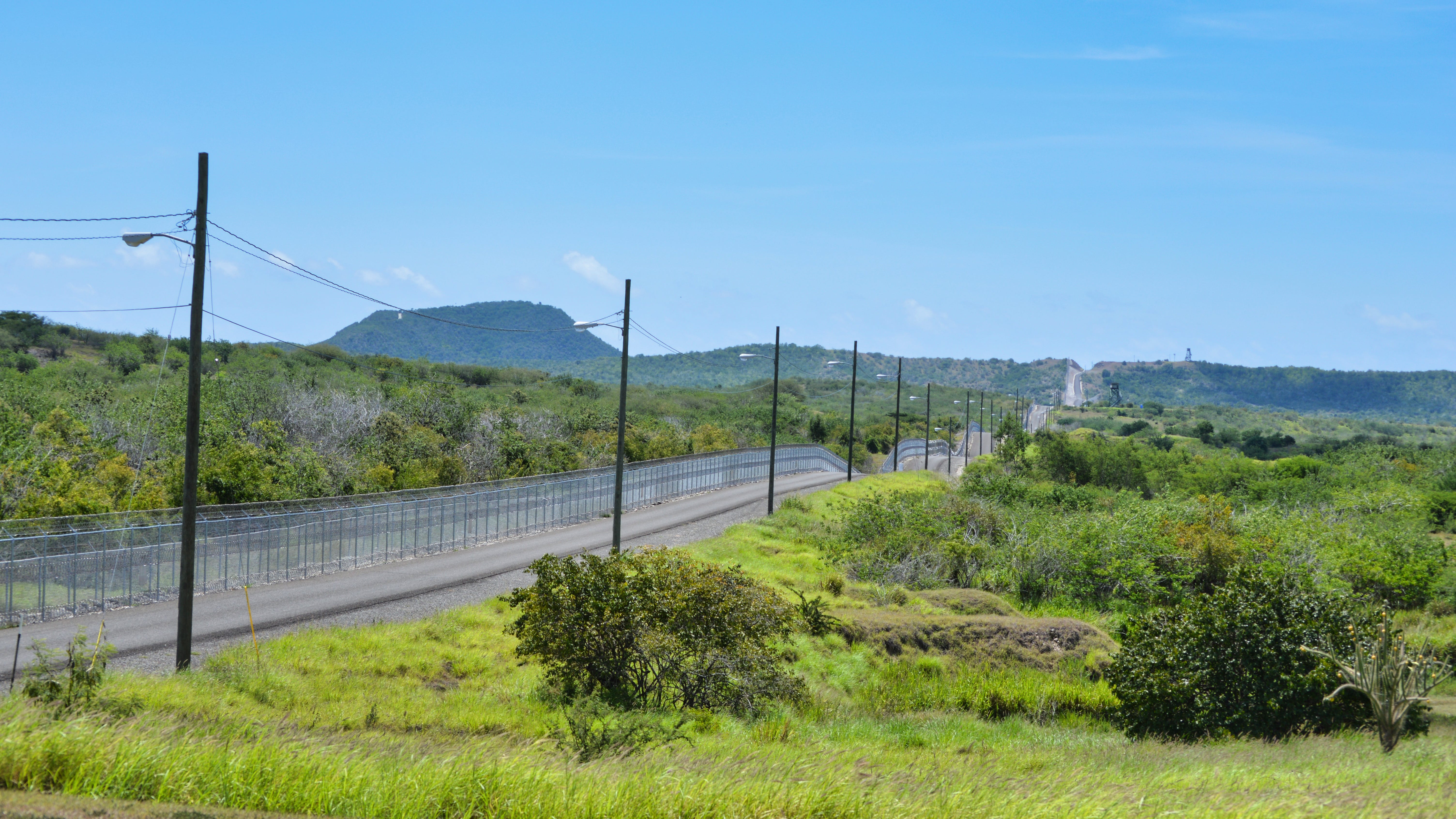
One of my most vivid memories from Guantánamo Bay is a banana rat dropping from the rafters of my carport onto the hood of my car, unbothered, delaying my commute across America’s oldest overseas base. GTMO has sat on Cuban territory since 1903, held in place by a lease Havana has protested for decades and has no legal mechanism to end. For generations, that presence made American power over Cuba visible. Today, it may be the least consequential instrument Washington holds over the island. The campaign reshaping Cuba moves through executive orders, compliance architectures, payment networks, and the institutional scaffolding that connects a modern state to the global economy. The base was built to project force; the decisive force arrived through banks.
As a long time resident of south and now mid-coast Florida, I can attest to the strong Cuban-American presence in this state and their ongoing concerns of those who remain in Cuba. Regardless of where on the globe strife and international machinations take place, I am always reminded that while regimes and administrations play their respective political games on global chessboards, real people having nothing to do with and little influence on governmental powers-that-be are the ones who pay the price. While leadership jockeys to assume "Alpha Dog" status, the citizenry gets swept along with the fall-out from such strategizing. Having met many Cubans who left their island years ago for a better life in America and Florida, I am saddened by the suffering of those still seeking freedom and decent lives in their island homeland.