

Field Observation: The Chokepoint at Xi's Right
Cai Qi and the Architecture of Chinese Power

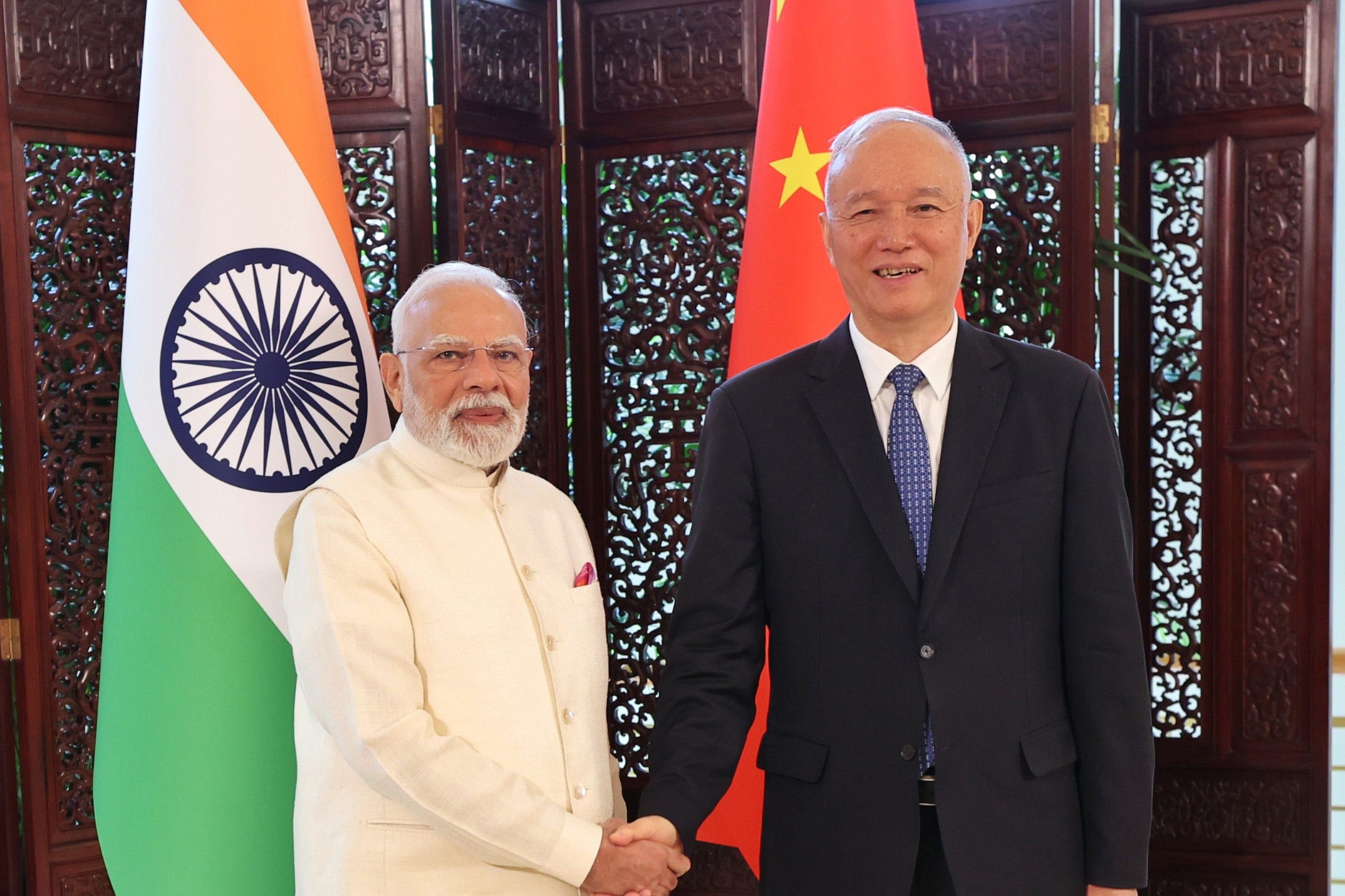
The Economist published a profile of Cai Qi on April 30, keyed to the Xi-Trump meeting planned for mid-May. It reports the facts accurately and misreads the structure.
Cai Qi concurrently holds the General Office, the Central Guard Bureau, and the Central Secretariat. He has a leading role on the cyber affairs commission and a seat on the National Security Commission. No one has held this combination since Wang Dongxing in 1977. The piece reports the position consolidation accurately and calls Cai Qi “Xi’s right-hand man” and “China’s second-most powerful man.” Both framings rely on personalist power vocabulary, where authority originates with Xi and others borrow it. That is conventional China-watching’s default register. It misses the structure.
The General Office controls what documents reach Xi and what people are scheduled into his calendar. The Central Guard Bureau controls physical access and recently appears to have been the apparatus that detained General Zhang Youxia, China’s most senior uniformed officer. The Central Secretariat controls how Xi’s decisions route into implementation across the party apparatus. The cyber affairs commission and the NSC seat extend this into information and security oversight. Concentrated in one position, this is administrative chokepoint architecture. The position itself is the leverage. Xi consolidated the regime’s routing infrastructure into a single position and placed a long-trusted associate in it.
The diplomacy pattern is the cleanest evidence. Foreign governments are not seeking solo meetings with Cai Qi because he is close to Xi. They are seeking him because he controls the routing. American financiers John Thornton and Stephen Schwarzman met him in 2024. The second Trump administration has requested a one-on-one and been refused. Meanwhile, Cai met Indian PM Modi (Aug 2025), Egyptian PM Madbouly (Aug 2025), and Turkish President Erdoğan (Sep 2025) solo. A British prosecution last year identified him as the senior figure two defendants met in 2022. None of this pattern fits “second-ranking official.” All of it fits “chokepoint.”
The succession question lands in the same place. The Economist posits Cai Qi as the obvious successor if Xi died tomorrow, citing PSC seniority and personal trust. The structural answer is sharper. Whoever succeeds Xi has to route through the General Office, the Central Guard Bureau, and the Central Secretariat to do so. Cai Qi already holds all three. Succession is not a matter of who Xi favors. It is a matter of who controls the infrastructure through which succession has to operate.
The closing line of the Economist piece shows the diagnostic gap. “Aides and advisers can easily be replaced. Trust cannot.” An aide who concurrently controls the General Office, Central Guard Bureau, and Central Secretariat is not interchangeable. Removing him is not a personnel swap. It is a reconfiguration of how the regime’s information and security plumbing operates. The article cannot name this because the frame treats officials as movable pieces and institutional architecture as background.
What this means for the May meeting. American officials sitting across from Xi will be sitting across from a leader who has just consolidated administrative chokepoint architecture. The decisive variable is what the architecture is configured to permit. The refusal to grant a solo meeting with Cai Qi is not a diplomatic detail; it’s a structural signal. The chokepoint is being held closed.