

Beyond Deterrence: How China Turned Taiwan Into a Governance Testbed
Why Taiwan Reveals the Limits of Deterrence and the Reality of Governance Competition

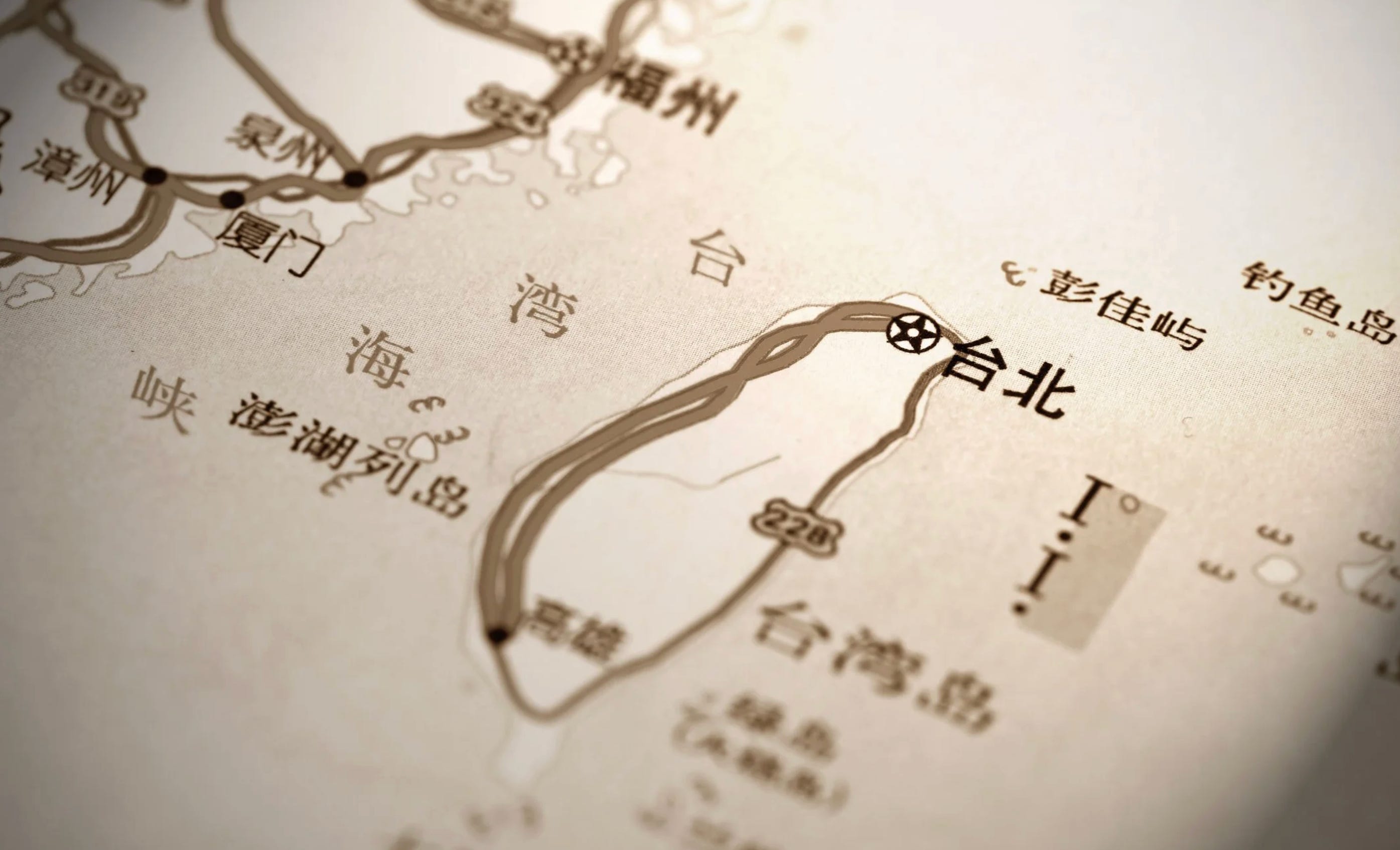
Taiwan dominates American strategic thinking as the ultimate deterrence problem. Pentagon war games model invasion scenarios. Think tanks debate force ratios. Analysts calculate escalation ladders. The conversation assumes deterrence is being tested.
That assumption is wrong—not because deterrence is failing, but because it was never the organizing logic shaping outcomes in Taiwan. Taiwan is not where deterrence is being tested. Taiwan is where governance competition is being made visible.
This is not a war plan or a Taiwan policy piece. It is a close examination of how modern power actually operates. The conflict most analysts fear is already happening.
Taiwan’s Position in China’s Governance System
Taiwan sits inside Beijing’s sovereignty narrative in ways that fundamentally distinguish it from other territorial disputes. Beijing does not treat Taiwan as foreign territory to be conquered, but as administratively owned territory experiencing a temporary governance interruption. The distinction shapes every interaction.
The island cannot be isolated from China’s internal legitimacy logic because Beijing’s domestic authority depends on resolving what it frames as administrative incompleteness. Taiwan’s continued separate governance represents more than territorial loss to Beijing—it represents systemic failure. The Chinese Communist Party’s legitimacy narrative requires demonstrating that Chinese administrative authority is both inevitable and superior to alternatives.
Taiwan functions as a continuous governance contest across diplomatic, economic, legal, and narrative domains. Beijing develops governance techniques through live application in contested zones, refining methods where outcomes carry immediate consequences.
Taiwan provides the clearest signal of methods that will appear elsewhere because the island’s legal status creates permissive conditions for governance warfare experimentation. Beijing can apply administrative pressure, narrative saturation, and jurisdictional claims without triggering formal alliance obligations or crossing established deterrence thresholds.
The island’s unique exposure stems from its precise position in the international system: claimed but not controlled, sovereign but not recognized, defended but not allied, prosperous but not secure. These ambiguities create ideal laboratory conditions for governance warfare techniques that require legal gray zones to operate effectively.
Beijing can experiment with legitimacy narratives that frame Taiwan as naturally Chinese without appearing to violate international law. Beijing can apply jurisdictional pressure through international organizations without triggering mutual defense treaties. Beijing can pursue economic integration that creates dependencies without constituting economic warfare. The ambiguity is strategic.
Taiwan reveals governance warfare in pure form precisely because traditional deterrence metrics do not apply cleanly. Military force ratios matter less than narrative acceptance. Economic costs matter less than administrative precedent. Alliance commitments matter less than jurisdictional recognition. The competition occurs in the space between peace and war, where administrative power accumulates faster than kinetic capability mobilizes.
The Limits of Deterrence in Continuous Competition
Deterrence assumes conflict is an event, escalation is a decision, force is the primary signal, and time is episodic. Each assumption fails when applied to Taiwan’s actual conditions.
Conflict is continuous rather than triggered. Beijing applies pressure through legal interpretations, diplomatic isolation, economic dependencies, and narrative saturation daily. No single action constitutes “aggression.” The accumulation reshapes possibility space without crossing deterrence thresholds.
Escalation is administrative, not kinetic. Beijing increases pressure by adjusting bureaucratic classifications, trade regulations, diplomatic protocols, and legal frameworks. These escalations occur at administrative speed through civilian mechanisms that military planning cannot easily register or counter.
Legitimacy and inevitability matter more than force ratios. Beijing’s strategy depends on convincing audiences that Taiwan’s current status is temporary and abnormal. Success is measured by acceptance of Beijing’s framing rather than military dominance. Force serves legitimacy rather than replacing it.
Time is cumulative and asymmetrical. Beijing operates on administrative time scales that extend beyond electoral cycles or deployment rotations. Each interaction establishes precedent. Each precedent normalizes the next pressure application. Deterrence calculates moments. Governance warfare accumulates conditions.
How Beijing Uses Taiwan to Test Governance Control
Beijing is not testing whether it can take Taiwan militarily. Military capability is assumed rather than questioned, even as visible exercises periodically reinforce that assumption. Beijing is testing whether the world will accept the conditions under which Taiwan is already taken administratively.
Beijing tests narrative saturation through systematic historical interpretation, linguistic standardization, cultural claims, and educational influence that frame Taiwan as naturally and inevitably Chinese. Success is measured by international acceptance of Beijing’s historical narrative rather than military submission. When foreign governments, media outlets, or academic institutions repeat Beijing’s framing uncritically, the narrative test succeeds incrementally.
Jurisdictional normalization proceeds by consistently treating Taiwan as a province in international forums, excluding Taiwan from multilateral institutions, and requiring third parties to acknowledge Beijing’s sovereignty claims as preconditions for engagement. Each diplomatic accommodation establishes precedent that makes the next accommodation easier to secure. International organizations that accept Beijing’s One China formulations participate in jurisdictional normalization whether they intend to or not.
Legal ambiguity serves Beijing’s strategy by exploiting the gaps between Taiwan’s de facto independence and de jure sovereignty status. Taiwan’s unclear international legal position allows Beijing to claim authority while denying Taiwan the protections that recognized statehood would provide. The ambiguity creates operational space that benefits Beijing’s patience strategy while constraining Taiwan’s response options.
Cognitive erosion operates through creating information environments where Taiwan’s separate identity becomes increasingly difficult to maintain over time. Economic integration programs, demographic pressure applications, bureaucratic coordination requirements, and cultural exchange initiatives gradually normalize Beijing’s authority claims within Taiwan itself. The goal is voluntary accommodation rather than forced submission.
Systematic persistence maintains pressure simultaneously across multiple bureaucratic channels that exceed Taiwan’s capacity to respond comprehensively. Trade restrictions, diplomatic isolation campaigns, military pressure applications, and legal challenge processes create a comprehensive governance environment that constrains Taiwan’s choices without requiring invasion.
Escalation management calibrates pressure applications to remain below deterrence thresholds while accumulating strategic effects. Each pressure increment stays within acceptable bounds individually while contributing to systematic degradation of Taiwan’s position collectively. The technique requires precision timing and careful measurement of international response capacity.
None of this requires invasion. None of this triggers established deterrence thresholds. All of it reshapes the decision space systematically long before crisis decision points emerge.
Taiwan’s Shift from Deterrence to Governance
Taiwan’s defense planning has shifted from preventing attack to governing resilience. The transition reveals that Taiwan’s leaders recognize the actual nature of the competition.
Taiwan now emphasizes psychological readiness over force ratios. Civil defense programs prepare citizens for administrative pressure, information warfare, and economic coercion rather than solely kinetic attack. The shift acknowledges that the decisive battle occurs in civilian domains.
Civic conditioning has replaced military deterrence as Taiwan’s primary focus. Educational programs, cultural preservation initiatives, and democratic participation mechanisms strengthen Taiwan’s separate identity against narrative integration pressure. The response treats governance as the decisive terrain.
Narrative continuity takes precedence over tactical advantage in Taiwan’s strategic planning. Historical education, international outreach, and cultural diplomacy maintain Taiwan’s distinct identity in the face of Beijing’s historical claims. The competition occurs in the domain of legitimacy rather than capability.
Administrative endurance supersedes deterrent threats in Taiwan’s defense conception. Institutional resilience, economic diversification, and international integration create governance alternatives to Beijing’s administrative claims. The defense is structural rather than kinetic.
Taiwan is not resisting invasion. It is resisting pre-war collapse.
Shared Governance Logic, Divergent Political Ends
Beijing governs inevitability to dominate. Taiwan governs inevitability to survive. Same logic, same terrain, but different values.
Beijing shapes conditions to make resistance appear futile, accommodation appear rational, and integration appear inevitable. Taiwan shapes conditions to make independence appear normal, resistance appear justified, and integration appear forced.
Beijing uses administrative authority to constrain Taiwan’s options. Taiwan uses democratic legitimacy to maintain international support. Beijing exploits legal ambiguity. Taiwan exploits moral clarity. Beijing emphasizes historical claims. Taiwan emphasizes current realities.
The methods mirror each other because both sides understand the competition’s actual nature. Governance warfare is not authoritarian by nature. It is structural. Democratic systems can employ governance warfare when they understand the terrain.
Both sides govern inevitability because both understand that perception shapes reality in governance competition. The side that successfully establishes its vision as inevitable wins without requiring victory in traditional terms.
Implications for Contemporary Strategic Competition
This governance warfare model will appear elsewhere because the conditions that make it effective are spreading rapidly across the international system. Legal ambiguity, jurisdictional complexity, and legitimacy contests now characterize multiple theaters of strategic competition.
Deterrence frameworks will keep misfiring because they assume kinetic logic applies to administrative competition. Force ratios become irrelevant when decisive action occurs in civilian bureaucracies, legal systems, and narrative frameworks. Military capability provides context but not determination in governance competitions.
Military-first responses will keep arriving late because they address effects rather than causes. By the time kinetic deterrence becomes relevant, the administrative battle has already shaped terrain in ways that constrain military options and predetermine escalation costs.
The pattern extends beyond territorial disputes. Economic competition, technological standard-setting, and institutional influence campaigns all operate according to governance warfare logic rather than deterrence assumptions. Infrastructure projects create governance terrain. Technical standards determine competitive advantages years before deployment. International organizations become competitive terrain rather than neutral forums.
Taiwan is not teaching us how to deter China. It is teaching us what kind of competition we are already in and how poorly prepared we are to recognize it. The competition most analysts fear has been underway for years through mechanisms that deterrence theory cannot register.